Did you know that you lose between 300 and 400 milliliters of water through your skin every day, regardless of perspiration? This natural physiological phenomenon has a name: insensible water loss, or IWB . Completely normal, it plays a key role in the balance and health of your skin .
The problem arises when this loss intensifies. The skin then dehydrates faster than it regenerates and shows signs of tightness, persistent discomfort, lack of radiance, and even fine lines . Understanding this mechanism allows you to adopt the right practices to preserve skin hydration in the long term.
What is insensible water loss?
Transepidermal water loss (TEWL) refers to the evaporation of water contained in the deeper layers of the epidermis and dermis . The water gradually rises to the surface of the skin and then evaporates naturally through the stratum corneum , without the involvement of the sweat glands.
Unlike active sweating, this water loss is invisible , independent of thermoregulation and takes place continuously within your body, even at rest.
You lose a certain amount of water every day through this process, depending on your body surface area, the climate, and your skin type. This amount can easily double or even triple when the skin barrier function is compromised.
The stratum corneum, composed of corneocytes , acts as a protective shield thanks to its intercellular lipids , namely ceramides, cholesterol, and free fatty acids. When this structure is damaged, water escapes more rapidly , leading to progressive skin dehydration .
Why does the skin lose water?
Internal causes
Skin aging is one of the most frequent causes. With age, your skin gradually produces fewer lipids and natural moisturizing factors (amino acids, urea, lactic acid). This decrease weakens the skin barrier and makes the stratum corneum more permeable.
Certain dermatological conditions , such as atopic dermatitis, eczema, or psoriasis , significantly amplify this phenomenon. Studies published in the Journal of Clinical Medicine demonstrate that these conditions profoundly alter the skin's structure and cause a much greater than normal water loss.
Important: In case of skin condition (eczema, psoriasis, dermatitis) or persistent symptoms, consult a dermatologist or qualified healthcare professional.
Recent research published in Scientific Reports also shows that hormonal variations during menopause can alter the composition of the hydrolipidic film and accentuate dehydration .
Your genetic makeup also influences the quality of your skin barrier: some people naturally have less effective protection.
External causes
The environment significantly influences skin penetration . Dry air, whether from heating in winter or air conditioning in summer, promotes the evaporation of water from the skin. Cold, wind, and UV radiation also contribute to this effect. Meanwhile, they weaken the lipid substances that protect your skin. Air pollution exacerbates this phenomenon by damaging the epidermal lipids essential for the cohesion of the stratum corneum.
Your daily skincare routine This is also a factor that should not be overlooked. According to scientific observations reported in Acta Dermato-Venereologica , alkaline soaps and overly aggressive products gradually weaken the natural hydrolipidic film . Similarly, frequent cleansing or mechanical exfoliation ultimately weakens the epidermis and promotes skin imbalance .
What are the signs of excessive insensible water loss?
The first symptom of excessive PIE is a feeling of tightness . Your skin lacks elasticity and feels rough. Your complexion becomes dull and loses its natural radiance .
Dehydration lines appear , especially around the eyes. Unlike expression lines, they remain superficial and can be reduced with proper hydration.
You may notice fine flaking, redness, or increased sensitivity to ingredients in certain cosmetic products. Makeup doesn't adhere well and accentuates texture irregularities. In more severe cases, your skin develops a cracked appearance , particularly visible on the legs and arms. These signs indicate a progressive skin imbalance.
How to limit insensible water loss?
Strengthen the skin barrier
Opt for skincare products rich in ceramides , these essential lipids that bind cells together. Ideally, choose comprehensive formulations combining ceramides, cholesterol, and fatty acids : this trio effectively rebuilds the intercellular cement.
Also consider using occlusive emollients and film-forming agents that create a protective film on the surface of your skin. Plant-based butters (shea, cocoa) and rich oils (argan, jojoba) perfectly fulfill this function, not forgetting humectants like hyaluronic acid . The principle is simple: hydrate the skin, then lock in the water with lipids.
Adopting good habits
Cleanse gently: use non-stripping products and opt for lukewarm water. Water that is too hot dissolves your skin's protective lipids.
Control the ambient humidity: maintain a rate between 40 and 60% , especially in winter when heating dries out the air.
Protect your skin from harsh weather conditions: wind, cold, sun… adapt your protection according to the external conditions.
Hydrate from the inside out: drink 1.6 to 2 liters of water per day to support skin hydration.
Take care of your diet : favour foods rich in essential fatty acids (omega-3 and omega-6) such as oily fish, nuts and vegetable oils.
The star assets
|
Active |
Main action |
Benefits |
|
Hyaluronic acid |
Absorbs water like a sponge |
Immediate hydration and plumping |
|
Niacinamide (2-5%) |
Stimulates ceramide production |
Strengthens the skin barrier and reduces water loss |
|
Amino acids, urea, lactic acid |
Retains water in the epidermis and dermis |
Long-lasting hydration and suppleness |
|
Squalane |
Restores the hydrolipidic film |
Protects against evaporation |
|
Panthenol |
Accelerates cell regeneration |
Repairs and soothes the skin |
|
Stimulates repair mechanisms |
It heals and strengthens the dermis and stratum corneum. |
Hydration vs. nutrition: don't confuse them!
Hydration refers to the supply of water: dehydrated skin lacks water, which causes tightness and fine lines. This condition affects all skin types, even oily skin.
Nutrition refers to the supply of lipids through appropriate cosmetic care : poorly nourished skin has a deficiency in lipids, which compromises its barrier function. Your skin can therefore be dehydrated without being dry , as is the case with dehydrated oily skin. Always combine hydration and nutrition for optimal effectiveness.
Scientific focus: measuring insensible water loss (IWL)
The TEWL (Transepidermal Water Loss) test is used to precisely determine the amount of water that evaporates from your epidermis. An evaporimeter measures the moisture gradient between two sensors placed at different distances from the skin.
Evaporation rate is expressed in grams per square meter per hour (g/m²/h) . Normal values are generally between 5 and 15 g/m²/h . When the skin barrier is compromised, these values can reach 30 to 100 g/m²/h .
FAQ – Transient Water Loss
What is the difference between perspiration and insensible water loss?
Sweating is an active process controlled by your sweat glands, noticeable during physical exertion. Insensible water loss is a passive, continuous, and imperceptible evaporation through your stratum corneum.
Can insensible water loss be completely eliminated?
No, this physiological phenomenon is natural and necessary. The goal is to maintain this loss within normal levels while preserving your skin barrier.
Which skincare products best limit skin evaporation?
Creams combining moisturizing actives, restructuring lipids and occlusive agents: ceramides, niacinamide, hyaluronic acid, humectants and vegetable oils.
Does insensible water loss also affect the scalp?
Yes, your scalp has a skin barrier weakened by harsh shampoos and heated styling tools, causing dryness and itching.
How can I tell if my skin lacks water or lipids?
If your skin feels tight after cleansing but balances out with a light cream, it's dehydrated. If the discomfort persists and requires rich textures, it's deficient in lipids.
Conclusion: preserving the skin's moisture balance
Transepidermal water loss directly impacts your skin's comfort . Understanding its mechanisms allows you to adopt a suitable routine. Strengthen the skin's barrier function with targeted active ingredients, gentle application techniques, and attention to environmental conditions. Your skin will thank you with its restored resilience and radiance.
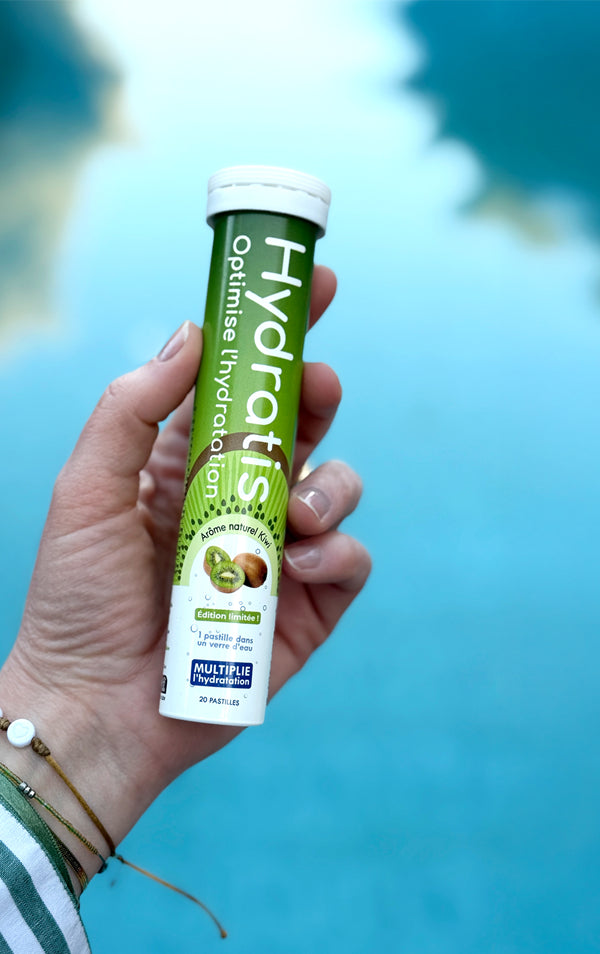
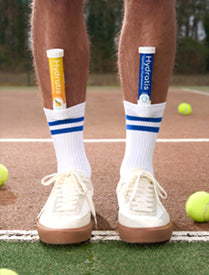
Want to take action to preserve your skin's hydration? Discover our tablets formulated to support the skin barrier from within. Rich in electrolytes , they help optimize cellular hydration and strengthen the skin's natural protective mechanisms against transepidermal water loss.
Bibliography
Dmitrieva, N.I., & Burg, M.B. (2011). Increased insensible water loss contributes to aging related dehydration. PloS one, 6(5), e20691. https://doi.org/10.1371/journal.pone.0020691
Berardesca, E., & Maibach, HI (1990). Transepidermal water loss and skin surface hydration in the non-invasive assessment of stratum corneum function.Dermatosen in Beruf und Umwelt. Occupation and environment,38(2), 50–53. https://pubmed.ncbi.nlm.nih.gov/2187664/
Machado, M., Salgado, T.M., Hadgraft, J., & Lane, M.E. (2010). The relationship between transepidermal water loss and skin permeability.International journal of pharmaceuticals,384(1-2), 73–77. https://doi.org/10.1016/j.ijpharm.2009.09.044
Boireau-Adamezyk, E., Baillet-Guffroy, A., & Stamatas, GN (2021). The stratum corneum water content and natural moisturization factor composition evolve with age and depend on body site.International journal of dermatology,60(7), 834–839. https://doi.org/10.1111/ijd.15417
Montero-Vilchez, T., Segura-Fernández-Nogueras, M.V., Pérez-Rodríguez, I., Soler-Gongora, M., Martinez-Lopez, A., Fernández-González, A., Molina-Leyva, A., & Arias-Santiago, S. (2021). Skin Barrier Function in Psoriasis and Atopic Dermatitis: Transepidermal Water Loss and Temperature as Useful Tools to Assess Disease Severity.Journal of clinical medicine,10(2), 359. https://doi.org/10.3390/jcm10020359
Kendall, AC, Pilkington, SM, Wray, JR, Newton, VL, Griffiths, CEM, Bell, M., Watson, REB, & Nicolaou, A. (2022). Menopause induces changes to the stratum corneum ceramide profile, which are prevented by hormone replacement therapy.Scientific reports,12(1), 21715. https://doi.org/10.1038/s41598-022-26095-0
Green, M., Kashetsky, N., Feschuk, A., & Maibach, HI (2022). Transepidermal water loss (TEWL): Environment and pollution-A systematic review.Skin health and disease,2(2), e104. https://doi.org/10.1002/ski2.104
Thune, P., Nilsen, T., Hanstad, IK, Gustavsen, T., & Lövig Dahl, H. (1988). The water barrier function of the skin in relation to the water content of stratum corneum, pH and skin lipids. The effect of alkaline soap and syndet on dry skin in elderly, non-atopic patients. Acta dermato-venereologica,68(4), 277–283. https://pubmed.ncbi.nlm.nih.gov/2459871/
Schild, J., Kalvodová, A., Zbytovská, J., Farwick, M., & Pyko, C. (2024). The role of ceramides in skin barrier function and the importance of proper formulation for skincare applications. International Journal of Cosmetic Science, Review Article. https://doi.org/10.1111/ics.12972
Kang, SY, Um, JY, Chung, BY, Lee, SY, Park, JS, Kim, JC, Park, CW, & Kim, HO (2022). Moisturizer in Patients with Inflammatory Skin Diseases. Medicina (Kaunas, Lithuania),58(7), 888. https://doi.org/10.3390/medicina58070888
Park, K.S. (2021). Pharmacological effects of Centella asiatica on skin diseases: Evidence and possible mechanisms. Evidence-Based Complementary and Alternative Medicine, 2021, Article 5462633. https://doi.org/10.1155/2021/5462633
Jansen van Rensburg, S., Franken, A., & Du Plessis, JL (2019). Measurement of transepidermal water loss, stratum corneum hydration and skin surface pH in occupational settings: A review.Skin research and technology: official journal of International Society for Bioengineering and the Skin (ISBS) [and] International Society for Digital Imaging of Skin (ISDIS) [and] International Society for Skin Imaging (ISSI),25(5), 595–605. https://doi.org/10.1111/srt.12711