You can't miss them: hydration tablets are now everywhere in pharmacies. They promise more effective hydration than water alone thanks to a targeted supply of electrolytes . But are they really effective, or is it just a marketing trend? We'll give you all the answers in this article ( scientific data , reviews, and user experiences).
What is a hydration tablet?
Definition and operating principle
These are effervescent tablets containing electrolytes that you dissolve in a glass or water bottle. Once dissolved, they primarily release sodium , chloride , potassium, and sometimes magnesium . Some products also provide vitamin C and trace elements such as zinc .
Inspired by WHO oral rehydration solutions , some formulas available on the market contain a small amount of carbohydrates , particularly sugar . Sugar is essential! The way the lozenges work relies primarily on the sodium-glucose (salt-sugar) co-transport , a mechanism that optimizes water absorption in intestinal cells.
Why do they appeal to athletes and travelers?
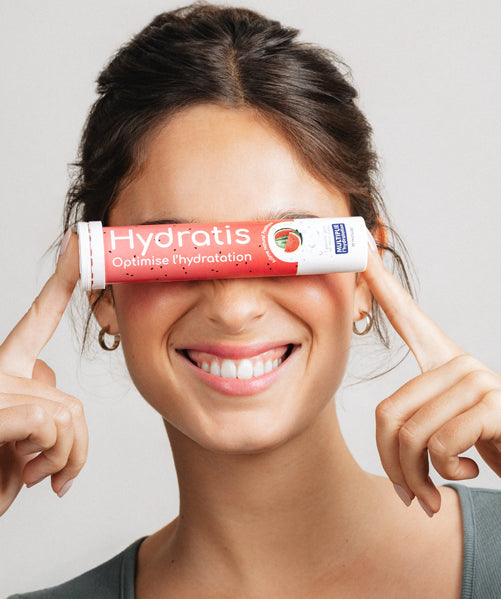
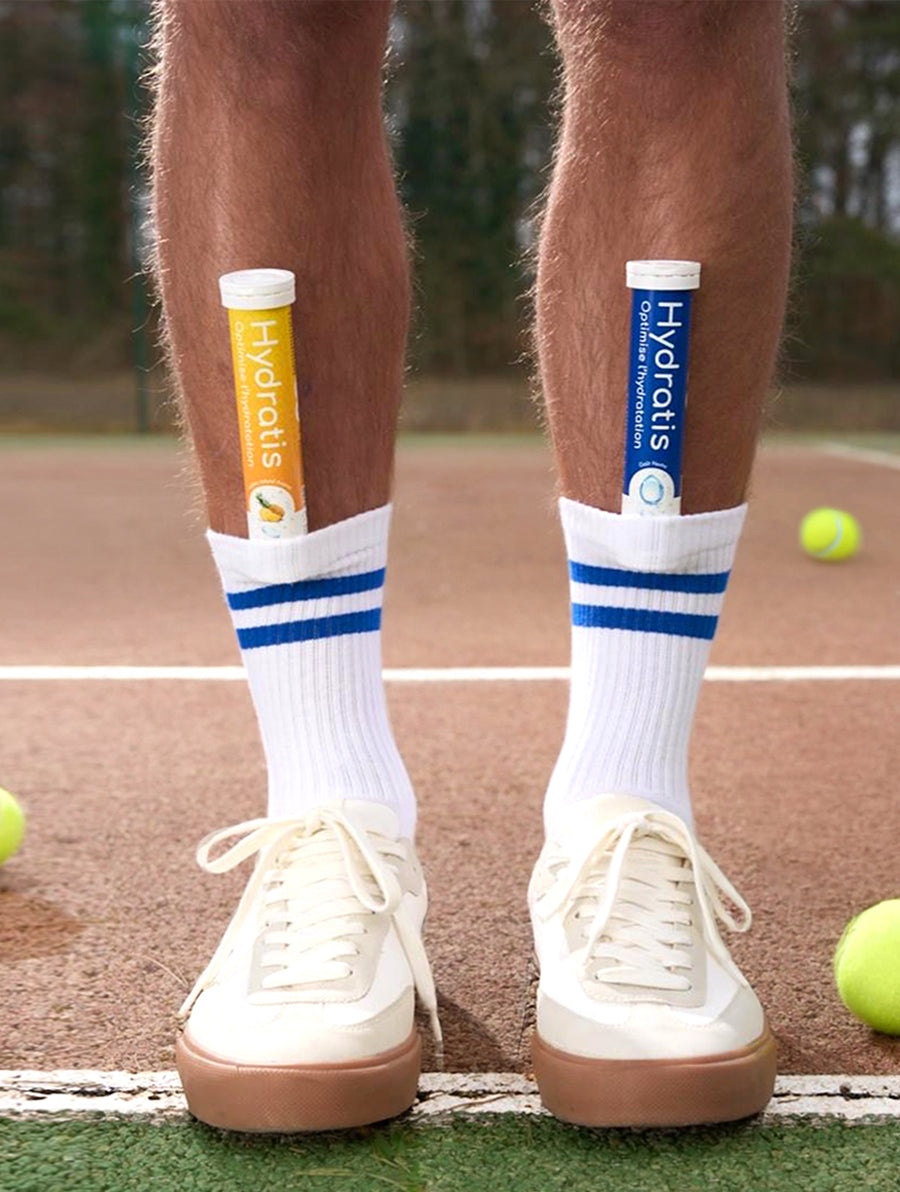
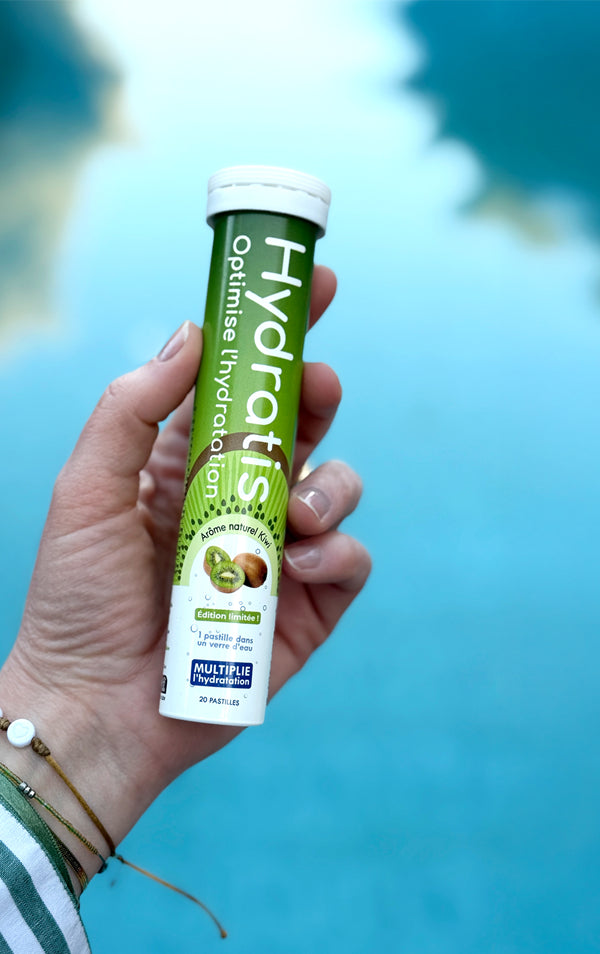
Available in tubes and several flavors (peach, strawberry, mixed berries, lemon), these tablets are appreciated for their compact size and ease of use . They are easy to carry and dissolve quickly, helping you stay hydrated during prolonged exertion or while in hot environments .
Hydration lozenge: effectiveness and scientific evidence

The role of electrolytes in rehydration
Electrolytes help the body absorb and retain fluids while maintaining fluid balance. and by ensuring proper muscle and nerve function . Sodium and potassium , in particular, regulate the movement of water between cells and facilitate its intestinal absorption .
Clinical studies on oral rehydration
Several studies show that a drink containing electrolytes hydrates more effectively than water alone after prolonged exertion .
Of the Research conducted with cyclists reveals that solutions containing approximately 45 mmol/L of sodium promote more complete fluid recovery than exclusive water consumption.
Research on ultra-runners confirms that electrolyte drinks contribute to stabilize serum sodium levels and decrease the risk of hyponatremia , a disorder linked to excessive dilution of blood sodium.
Other studies indicate that these solutions restore fluid balance more quickly after severe dehydration due to heat or severe water restriction.
Situations where they are most effective
These products are particularly useful:
- during intense exertion or activities lasting more than 90 minutes;
- during periods of intense heat which increase sweat loss;
- during episodes of moderate dehydration , such as in cases of diarrhea related to gastroenteritis .
Advantages of hydration tablets
Practicality and portable format
The compact format This is a significant advantage. One tube of tablets replaces several ready-to-use bottles and simplifies logistics during sports or travel. You can therefore stay properly hydrated whenever you have access to drinking water or a water source.
Improved absorption of fluids and minerals
By dissolving a tablet, you obtain a hypotonic drink , meaning it is less concentrated in electrolytes and sugars than blood. This slight difference in concentration creates a "pull" of water into the bloodstream, which accelerates the passage of water through the intestinal wall and thus allows for a faster restoration of fluid and mineral reserves.
Risks and precautions to be aware of
Excessive mineral consumption
Ingesting too many minerals, especially sodium , can lead to undesirable effects : headaches, water retention, digestive problems ... Always respect the dosage indicated by the brand.
Risks for people with high blood pressure
If you suffer from hypertension , you must remain vigilant. Some products are very high in sodium, and frequent use without medical supervision can worsen your condition.
Possible interactions with certain treatments
Diuretics or certain cardiovascular medications can alter mineral balance . If you are taking these medications, consult your doctor before using electrolyte supplements.
Difference between occasional and daily use
Occasional use of these tablets is generally not a problem for healthy individuals. However, daily consumption without a genuine need can disrupt the body's mineral balance .
Comparison: Hydration tablets vs. other solutions
Tablets vs. water alone
Water alone hydrates but does not replace the electrolytes lost through sweat. These tablets replenish this supply when needed.
Lozenges vs. energy and isotonic drinks
Hydration tablets primarily target remineralization after perspiration . Indeed, they provide very little sugar and are therefore suitable for situations where the goal is to replenish lost minerals rather than increase available energy . Traditional isotonic drinks contain more carbohydrates than electrolytes. They support prolonged exertion thanks to their energy content .
When to choose a medical rehydration solution
In cases of severe diarrhea or repeated vomiting , it is necessary to prioritize a Standard medical oral rehydration solution . These formulations meet strict clinical standards .
How to use hydration tablets correctly?
Recommended dosage depending on the situation
Always follow the manufacturer's instructions . Generally, one tablet should be dissolved in 500-750 ml of water . You should adjust the quantity according to the duration of the activity , the weather conditions , and your perspiration .
Ideal time to consume
- Before the effort : to optimize your mineral reserves.
- During exercise : if you sweat a lot.
- After exertion : to compensate for your losses and accelerate recovery.
Precautions for children, seniors and pregnant women
- Children : adjust the dosage according to weight.
- Seniors : check the sodium content.
- Pregnant women : seek medical advice, especially in cases of hypertension or water retention.
Testimonials, opinions and feedback

Many users report:
- faster recovery after a long session;
- less cramping and fatigue during prolonged exertion;
- more stable hydration during periods of high heat ;
- a reduction in headaches related to dehydration ;
- a light and pleasant taste, often appreciated because it is not very sweet.
Doctors and nutritionists confirm their usefulness during prolonged exertion , particularly for maintaining electrolyte balance . and prevent cramps . However, they remind us that they do not replace water or a balanced diet .
In terms of satisfaction, feedback is generally very positive. For example, Hydratis, our brand, displays a rating of 4.5/5 based on 499 reviews Trustpilot , with 86% rated 5 stars , which means that consumers of our products are satisfied, which is a sign of effectiveness.
FAQ: Everything you need to know about hydration tablets
Are hydration tablets really better than water?
Yes, in cases where you lose a lot of minerals (heat, exertion…), they help to compensate for these losses.
What are the best hydration tablets?
The best ones have a good sodium-potassium ratio, contain sugar, and are free of artificial colors and preservatives. Check the ingredients list before buying.
Are hydration tablets suitable for children?
It depends on the formulation and dosage. Read the labels carefully and, if necessary, seek advice from a specialist.
Conclusion
Hydration tablets are effective when used correctly, particularly during prolonged exertion, in hot weather, or with significant sweat loss . Their action relies on well-established mechanisms, such as improving water absorption thanks to electrolytes and a small amount of sugar. However, they are not a substitute for drinking plain water daily, nor for medical solutions used in cases of severe dehydration. If you have a chronic condition (hypertension, kidney failure, heart problems) or are taking medication that may alter your fluid and electrolyte balance, it is recommended that you consult a healthcare professional before using them.
The information presented in this article is for educational purposes only and is not a substitute for personalized medical advice.
Bibliography
Wright, EM, & Loo, DD (2000). Coupling between Na+, sugar, and water transport across the intestine. Annals of the New York Academy of Sciences , 915 , 54–66. https://doi.org/10.1111/j.1749-6632.2000.tb05223.x
Ly, NQ, Hamstra-Wright, KL, & Horswill, CA (2023). Post-Exercise Rehydration in Athletes: Effects of Sodium and Carbohydrate in Commercial Hydration Beverages. Nutrients , 15 (22), 4759. https://doi.org/10.3390/nu15224759
Rehrer NJ (2001). Fluid and electrolyte balance in ultra-endurance sport. Sports medicine (Auckland, NZ) , 31 (10), 701–715. https://doi.org/10.2165/00007256-200131100-00001
James, L.J., & Shirreffs, S.M. (2015). Effect of electrolyte addition to rehydration drinks consumed after severe fluid and energy restriction. Journal of strength and conditioning research , 29 (2), 521–527. https://doi.org/10.1519/JSC.0000000000000657
Sachdev HP (1996). Oral rehydration therapy. Journal of the Indian Medical Association , 94 (8), 298–305. https://pubmed.ncbi.nlm.nih.gov/8855579/
Courbevoie-Neuilly Hospital. (n.d.). Hydratis: our complete medical review of these hydration tablets . Accessed November 18, 2025, at the address https://www.hopitalcourbevoieneuilly.com/blog/hydratis-notre-avis-medical-complet-de-ces-pastilles-dhydratation/
Trustpilot. (n.d.). Hydratis – customer reviews . Trustpilot. Accessed November 18, 2025, from https://fr.trustpilot.com/review/hydratis.co