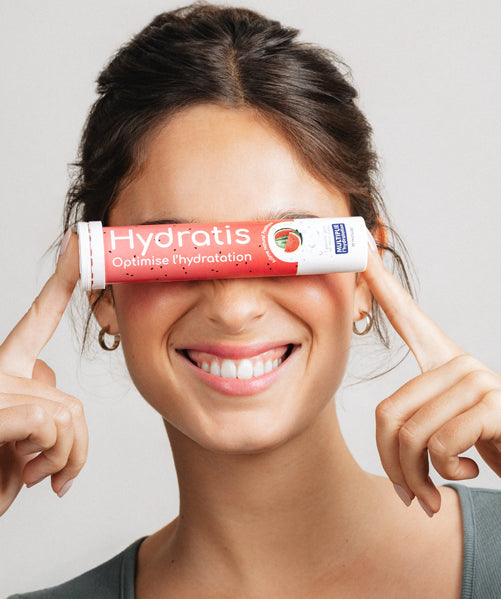
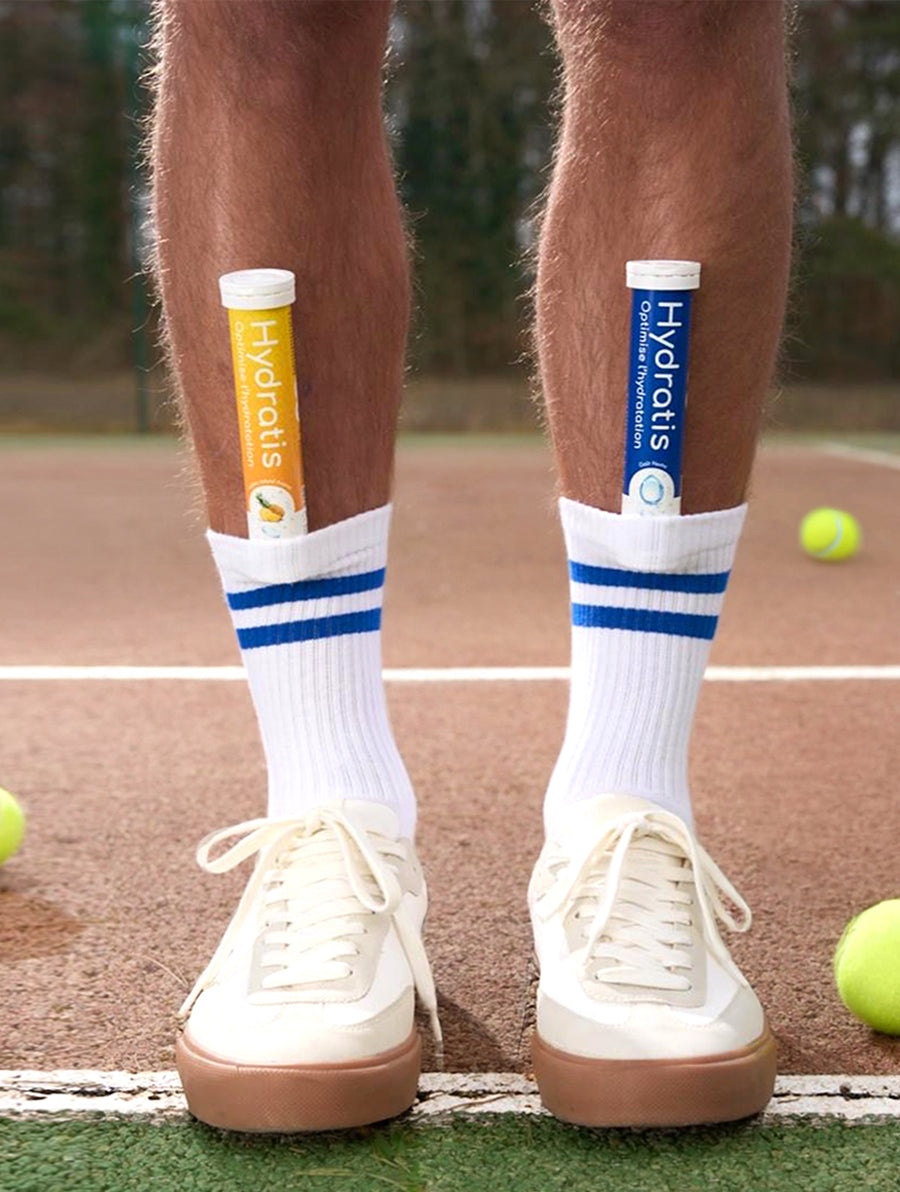
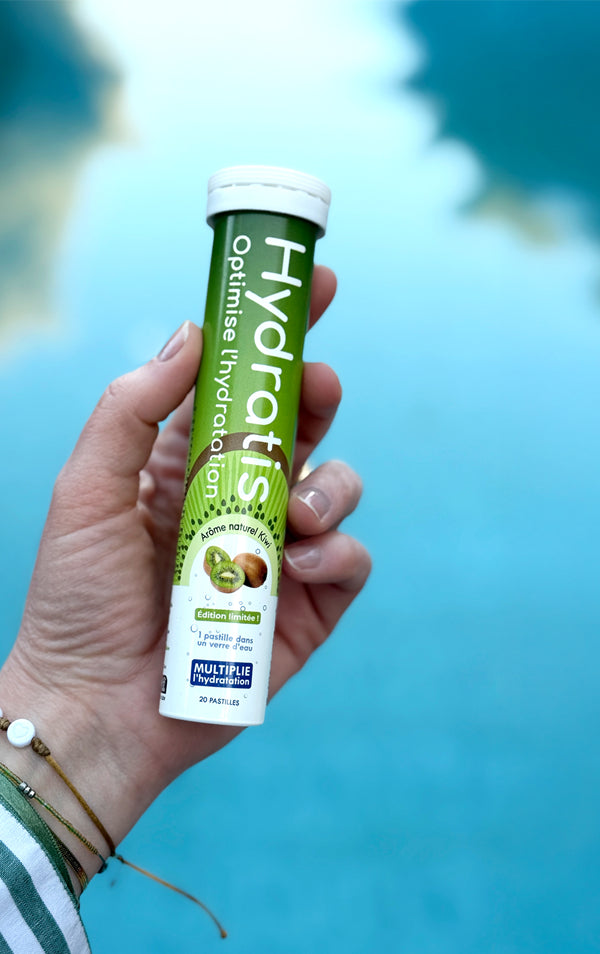
If you're into running, trail running, or ultra-endurance, you've probably already heard of salt tablets for sports. These tablets have gained popularity among athletes in recent years. But in what situations are they actually useful? And how can you use them to get the most benefit? Here's what you need to know to intelligently integrate them into your hydration strategy.
What is a salt tablet for sports?
A sports salt tablet is a nutritional supplement composed primarily of sodium, often combined with other minerals such as magnesium and potassium. Some formulations also contain calcium, zinc, and vitamins B and C.
The term "sports salt tablet" generally encompasses electrolyte tablets. effervescent tablets to dissolve in water and salt capsules to swallow or chew.
Why do athletes use salt tablets?

During prolonged exertion, in high heat or during a very intense session, you lose both water and electrolytes , especially sodium when you sweat.
Under these conditions, if you hydrate only with plain water , you risk further diluting your remaining sodium. This imbalance can lead to decreased performance , cramps , or even, in some cases, hyponatremia (sodium levels too low in the blood).
Salt tablets help to compensate for some of these losses of essential minerals to maintain the body's balance .
The role of sodium in exercise
THE Sodium plays a key role in the body during physical exertion . It regulates the fluid balance between your cells and your blood, helps maintain stable blood pressure, participates in the transmission of nerve signals, and supports muscle contraction and coordination .
When do we really need it?
For example, if you're doing a 45-minute run , regular hydration will be perfectly sufficient. However, you'll need mineral supplements for a 3-hour trail run in warm weather.
Electrolyte tablets are useful in very specific situations:
- Effort lasting more than 90 minutes .
- Endurance sports (marathon, trail running, cycling, triathlon…).
- A series of closely spaced sessions.
- High-intensity training.
- Competition in hot weather or dry climate, even in short formats.
- Excessive sweating (soaked swimsuit, white marks on clothes or skin).
Benefits and limitations of salt tablets for sports

The expected benefits
When needed, salt capsules can:
- Helps prevent dehydration related to sodium loss .
- Reduce the risk of cramps related to electrolyte imbalance.
- Maintain good nerve and muscle activity.
- Maintaining mental clarity during long-term efforts.
- Limit the drop in performance during periods of high heat.
Risks and precautions
Taking salt tablets or capsules in concentrated doses can cause diarrhea, nausea, bloating, vomiting, or intense thirst .
This is why you should always consume your capsules with water and dissolve the effervescent tablets correctly according to the manufacturer's instructions.
In case of edema , headaches or muscle weakness , immediately reduce supplementation and favor pure water.
How to use salt tablets during sports?
Electrolyte tablet : Dissolve in a 0.5 to 0.75 liter bottle or water bottle according to the manufacturer's recommendations. Consume this drink gradually over one to one and a half hours.
Salt capsules : Take one to two capsules per hour of exercise, according to the recommended dosage. Drink 200 to 300 ml of water immediately to facilitate absorption.
Adjust your intake to the weather conditions . In hot and humid weather, slightly increase your intake. In winter, your needs decrease because you sweat less.
Always test your supplementation strategy during training . Do not change products or dosages on competition day.
Alternatives to sports salt tablets
Mineral water rich in sodium , such as Saint-Yorre or Vichy Célestins, naturally provides sodium and is easily digested during exercise.
Another option is to add salt to your water bottle. A pinch provides approximately 250 to 300 mg of sodium. This isn't as precise as a salt tablet, but it allows you to compensate for losses .
You can also consume salty foods before or after training: soup, olives, salty bars, or even a simple vegetable broth.
Isotonic drinks and salty energy gels are also sources of electrolytes to consider in your sports nutrition strategy .
Testimonies and scientific evidence
Research shows that the effectiveness of sodium supplementation depends on the context and intensity of the effort . During longer and more intense events, such as a half-ironman, it can support your body during and after the effort .
For cramps, most studies indicate that muscle fatigue , not an electrolyte imbalance , is the primary cause. Indeed, one study showed that 69% of runners experienced cramps despite adequate hydration and sodium intake. Only those who lose a significant amount of salt through perspiration truly require targeted supplementation.
Practical tips for choosing the right sports salt tablet

Before buying your electrolyte tablets or salt tablets , take the time to analyze their composition. Opt for a balanced product containing sodium, potassium, magnesium, chloride, and calcium.
Pay attention to the dosages. In general, a sodium intake between 200 and 400 mg is suitable for most athletes.
The format is also important. Capsules are more practical for very long efforts , such as ultra-distances, while effervescent tablets are ideal for moderate training or for daily hydration .
Opt for recognized and certified brands , which guarantee better traceability and a balanced formulation.
Finally, don't forget about taste and digestive tolerance : choose a flavor (lemon, mixed berries, etc.) according to your preferences. Before finalizing your choice, carefully read reviews from other athletes and compare prices.
The most effective approach is to test several products during training to identify the one that suits you best.
FAQ about sports salt tablets
Should you take salt tablets on every outing?
No, they are not necessary for every session. Reserve them for long exercises lasting more than two hours or during periods of intense heat.
Do salt tablets really prevent cramps?
Not always. They can help if your cramps are related to a high loss of sodium in sweat, but muscle fatigue remains the main cause of cramps for most athletes.
What is the difference between an isotonic drink and a salt tablet?
An isotonic drink combines water, carbohydrates, and electrolytes in a ready-to-drink liquid format. Salt tablets are concentrated in electrolytes, especially sodium.
Can there be side effects?
Yes. An excess can cause digestive problems, nausea, and excessive thirst. Just be sure to stick to the recommended doses.
Are salt tablets useful in winter?
Normally, in cold weather, you sweat less and your sodium loss remains moderate. However, the tablets are still useful during very long periods of exertion, even in cool weather!
Conclusion
Salt tablets for sports aren't essential in every situation, but they can support endurance during long, intense efforts or in hot weather . Their benefit lies in replenishing sodium and other minerals lost through sweat. Use them judiciously and test them during training . The key is to adopt a personalized approach based on your needs and adjust it gradually to find what works best for you.
Bibliography
Rosner, M. H. (2009). Exercise-Associated Hyponatremia. Seminars in Nephrology, 29(3), 271-281. https://doi.org/10.1016/j.semnephrol.2009.03.001
Veniamakis, E., Kaplanis, G., Voulgaris, P., & Nikolaidis, PT (2022). Effects of Sodium Intake on Health and Performance in Endurance and Ultra-Endurance Sports. International journal of environmental research and public health, 19(6), 3651. https://doi.org/10.3390/ijerph19063651
Latzka, W. A., & Montain, S. J. (1999). Water and electrolyte requirements for exercise. Clinics in sports medicine, 18(3), 513–524. https://doi.org/10.1016/s0278-5919(05)70165-4
Cosgrove, SD, & Black, KE (2013). Sodium supplementation has no effect on endurance performance during a cycling time-trial in cool conditions: A randomized cross-over trial. Journal of the International Society of Sports Nutrition, 10 (1), 30. https://doi.org/10.1186/1550-2783-10-30
Del Coso, J., González-Millán, C., Salinero, JJ, Abián-Vicén, J., Areces, F., Lledó, M., Lara, B., Gallo-Salazar, C., & Ruiz-Vicente, D. (2016). Effects of oral salt supplementation on physical performance during a half-ironman: A randomized controlled trial. Scandinavian Journal of Medicine & Science in Sports, 26 (2), 156–164. https://doi.org/10.1111/sms.12427
Schwellnus, M.P., Nicol, J., Laubscher, R., & Noakes, T.D. (2004). Serum electrolyte concentrations and hydration status are not associated with exercise associated muscle cramping (EAMC) in distance runners. British Journal of Sports Medicine, 38 (4), 488–492. https://doi.org/10.1136/bjsm.2003.007021
Schwellnus, M.P. (2009). Cause of exercise associated muscle cramps (EAMC)—altered neuromuscular control, dehydration or electrolyte depletion? British Journal of Sports Medicine, 43 (6), 401–408. https://doi.org/10.1136/bjsm.2008.050401