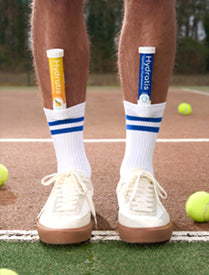
Sport is beneficial for both physical and mental health, but to get the most out of it, proper recovery is essential. Adequate recovery helps prevent injuries, improves performance, and promotes muscle growth. In this article, we'll explore the best post-exercise recovery methods.
The importance of recovery after sport

Recovery after an intense workout is crucial for your body to regenerate . Here's why it's so essential:
During physical exertion, muscle fibers undergo micro-tears. Recovery is the period when these fibers rebuild and become stronger . Hydratis solutions help provide essential minerals to promote this muscle repair. Tired muscles and a body that hasn't fully recovered are more susceptible to injury, so this helps maintain a good electrolyte balance , reducing the risk of muscle cramps and dehydration-related injuries.
Effective recovery will allow you to improve the sequence between your sports sessions and maintain your athletic performance .
Sparkling water, mineral water, tap water, bottled water: which to choose?
Imagine you've just finished an intense cycling session . You've sweated and lost a lot of water and salt (sodium). Now it's time to rehydrate, which means putting water and salt back into your body.
But what is the best way to do it?
A scientific study examined three ways to rehydrate after exercise: drinking mineral or tap water, using a sports drink , or a hypotonic drink . It turned out that the hypotonic solution was the most effective because it contains an optimal concentration of electrolytes, particularly sodium. Sodium is crucial because it's the most lost through sweat. Proper rehydration requires replacing not only water but also lost sodium, which tap water doesn't do. The hypotonic solution does this very well because it has a higher sodium concentration than regular mineral water.
Why choose water rich in electrolytes?
Electrolytes play various important roles in metabolism, particularly in water management. Magnesium is involved in muscle relaxation , potassium in muscle contraction, and calcium in neuromuscular excitability, among others.
As for sodium, it is a key element in post-exercise rehydration. It helps restore fluid balance by facilitating water retention in the body and limiting urinary excretion. Indeed, sodium contributes to maintaining plasma osmolarity, which promotes better intestinal water absorption and reduces post-exercise diuresis. Furthermore, sufficient sodium intake after heavy sweating helps prevent hyponatremia, an imbalance that can affect neuromuscular function and blood pressure regulation. Thus, a hydration drink containing sodium will optimize fluid and electrolyte recovery, ensuring a more effective restoration of physiological functions after exercise.

And guess what? Hydratis offers just such hypotonic solutions! By choosing these drinks, you ensure you hydrate effectively after exercise.
Steps for effective recovery after exercise
Now that we understand the importance of recovery after sport, let's examine the essential steps for effective recovery!
First, it's essential to emphasize the importance of warming up before exercise. A good warm-up prepares your muscles and joints for exertion, thus reducing the risk of injury. Similarly, regular physical activity is crucial for allowing your body to gradually adapt to the demands of training, promoting better recovery.
After exercise, take time to cool down by walking gently or doing light stretches. Stretching helps relax muscles and reduce stiffness.
Nutrition also plays a vital role in both recovery and minimizing muscle soreness . So don't hesitate to consume a snack rich in protein and carbohydrates to help repair your muscles. In addition, make sure you stay properly hydrated.
As for sleep, it's essential for recovery . During sleep, your metabolism performs numerous repairs and recovery processes. So make sure you get enough sleep to allow yourself to fully recover!
Diversifying your physical activity is also key. By varying the types of exercises you do, you'll work different muscle groups, allowing other groups to rest and recover. This helps prevent overuse of certain muscles and therefore reduces the risk of injury. This principle, called cross-training , can be beneficial for runners , who can, for example, incorporate cycling sessions into their routine. This activity, with its lower impact on the joints, helps protect them while continuing to develop aerobic and cardiorespiratory fitness.

Finally, it's important to pay attention to the warning signs your body may send regarding overtraining: insomnia, loss of appetite, persistent fatigue, and irritability are all indicators of physical exhaustion. If these signs appear, it's important to reduce the intensity of your exercise and give your body time to recover.
Hydratis products for effective recovery
Now that you understand the importance of recovery and Hydratis products, let's explore how these products can help you maximize your recovery.
Hydration drinks are essential for maintaining proper fluid balance; they provide not only water, but also electrolytes (magnesium, sodium, potassium, and chloride) and trace elements (manganese and zinc). In fact, Hydratis is used by many athletes to maximize their hydration and also helps support and improve their athletic performance and endurance, while also reducing the risk of cramps and injuries.
When you sweat, you lose a lot of water and minerals. To stay at your best, it's important to replenish these losses! That's why Hydratis is a great ally for athletes: its products optimize and accelerate hydration while also providing electrolytes and trace elements.
We recommend dissolving two tablets in a 500ml water bottle to drink throughout your activity, repeating as needed. In addition, you can drink a glass of water with one tablet beforehand to replenish hydration and minerals, and another after your activity to optimize your recovery.

Do not exceed the maximum daily dose of 5 lozenges for an average adult!
Bibliography
Fan, P. W., Burns, S. F., & Lee, J. K. W. (2020). Efficacy of Ingesting an Oral Rehydration Solution after Exercise on Fluid Balance and Endurance Performance. Nutrients , 12 (12), 3826. https://doi.org/10.3390/nu12123826
Li, H., Early, K.S., Zhang, G., Ma, P., & Wang, H. (2024). Personalized Hydration Strategy to Improve Fluid Balance and Intermittent Exercise Performance in the Heat. Nutrients , 16 (9), 1341. https://doi.org/10.3390/nu16091341
Armstrong LE (2021). Rehydration during Endurance Exercise: Challenges, Research, Options, Methods. Nutrients, 13(3), 887. https://doi.org/10.3390/nu13030887