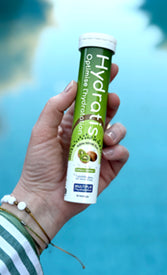
Drinking an isotonic drink during a trail run is a great practice if you want to limit fatigue and boost your performance . As the kilometers accumulate, proper hydration becomes essential to preserve your endurance and support your muscles over the long haul .
That said, this drink must be consumed in a specific way depending on the stage of the race and the intensity of the effort in order to maximize its effects on your body.
In this article, you will discover the benefits of isotonic drinks for trail running, the list of ingredients to prepare it yourself, as well as the quantity to consume depending on the distance covered.
Why consume an isotonic drink while trail running?
During a trail run, the body is subjected to significant stress. To cope with this, consuming an isotonic drink is highly recommended.
To compensate for water and electrolyte losses
Prolonged exertion leads to significant fluid and electrolyte losses . In other words, you lose water and minerals that are essential for maintaining fluid balance and muscle contraction capacity .
Without adequate water and electrolyte intake, runners are at risk of cramps, decreased performance , or intense muscle fatigue . Consuming an isotonic drink helps to compensate for these losses and prolong performance.
Optimize endurance and delay fatigue
Isotonic drinks contain sugar which will provide a rapid boost to the body when it is subjected to significant energy loss during exercise.
This not only allows you to quickly recharge your energy reserves , but also to maintain a stable energy level over time .
Maintaining stable blood glucose levels during exercise
During a race, the body produces energy by rapidly drawing on its glycogen reserves . If these reserves are depleted too quickly, blood sugar levels drop. This situation generally leads to fatigue, decreased concentration , or even reduced performance.
Thanks to their content of simple and complex carbohydrates, isotonic drinks release energy gradually. They thus help to maintain stable blood sugar levels during trail running.
Helps eliminate metabolic waste
During trail running, your body produces various metabolic waste products such as lactate (lactic acid ), carbon dioxide , urea , and ammonia . By consuming an isotonic drink , you hydrate yourself and, at the same time, facilitate their elimination.
This elimination, mainly ensured by the kidneys, limits the accumulation of toxins in the body and reduces the risks of nausea , headaches as well as the sensations of heavy legs that generally occur during exertion.
Ideal composition of an isotonic drink for a trail run

To understand the effectiveness of an isotonic drink in trail running, it is important to look at the list of ingredients it contains.
Simple and complex carbohydrates for energy
An effective isotonic drink combines simple and complex carbohydrates for optimal energy supply during exercise.
Complex carbohydrates , also known as slow-release sugars, provide a continuously available supply of sugar and allow the body to maintain a stable average energy level .
Simple carbohydrates or fast-acting sugars , such as sucrose and dextrose , are quickly absorbed and act as an energy booster with every sip . This blend thus produces a drink that effectively supports athletes throughout their race.
Key electrolytes: sodium, potassium, magnesium
Electrolytes are essential components of an isotonic drink. They help compensate for losses due to perspiration and maintain fluid and muscle balance , especially during prolonged exertion. This list of minerals includes:
- Sodium (300 to 500 mg/L) : Sodium promotes water retention in cells and limits the risk of dehydration . It also plays a key role in nerve transmission and muscle contraction ;
- Potassium (150 to 250 mg/L) : its role is to support muscle function and prevent the onset of cramps;
- Magnesium (20 to 50 mg/L) : present at a ratio of 20 to 50 mg/L, magnesium reduces neuromuscular fatigue and participates in the production of cellular energy ;
- Chloride (200 to 400 mg/L) : As for chloride, it helps to maintain acid-base balance and complements the action of sodium for effective hydration .
Natural ingredients: honey, lemon, green tea, mint
To enrich an isotonic drink and provide additional benefits, certain natural and organic ingredients can be added.
Honey provides a natural dose of readily digestible carbohydrates, while lemon and other fruits provide essential vitamins and minerals .
There is also green tea and mint which contribute respectively to the supply of antioxidants , and to freshness during exercise .
How much isotonic drink should I consume depending on the distance of the trail run?
The amount of isotonic drink to consume varies depending on the distance and intensity of the effort . Properly managing this intake will allow you to boost your performance and optimize your nutrition during the race.
Short trail run (10 to 20 km): light and targeted hydration
Even over a shorter distance (10 to 20 km), a short trail run remains an intense exercise. To avoid energy depletion , you can carry an isotonic drink in a water bottle or flask.
This allows you to adjust the dose according to the duration of the effort and your nutritional needs. The recommended average is 500 ml to 1.5 liters of drink . Opt for a low-sugar ratio to avoid digestive discomfort if the race lasts less than 1 hour and 30 minutes .
Medium trail running (20 to 80 km): active hydration strategy
For an average trail run, nutritional and energy needs are greater. It is recommended to consume approximately 500 ml to 1 liter of fluid per hour of exertion to maintain an optimal ratio of water, electrolytes, and energy-providing carbohydrates.
Use a 1.5 to 2 liter container , such as a CamelBak , as well as a flask or soft cup for refueling. Adjust the amount consumed according to your pace and the weather conditions .
Ultra-trail (80 km and over): structured protocol with aid stations
In the case of an ultra-trail, nutrition and hydration become strategic elements. It will therefore be necessary to precisely plan the amount of fluid consumed per hour (between 600 and 800 milliliters ) and adjust it according to the temperature, altitude, or intensity of the effort.
To limit the risk of nausea or extreme fatigue , it is recommended to bring several different energy drinks :
- A drink with a neutral taste, like water,
- A slightly salty version
- A fruit-based version ,
- Broths.
These options allow for variation in the intake of vitamins , electrolytes, and energy-providing carbohydrates .
Homemade recipe for a natural isotonic drink with honey

If you wish to avoid buying often expensive isotonic drinks on the market, it is possible to create your own preparation from a list of natural and organic ingredients .
Recipe for an isotonic drink for a short trail run
For a short trail run, here's a recipe to prepare and adapt to your tastes and preferences:
List of ingredients
- Between 30 and 70 g of sugar (sucrose), adjusted according to the temperature and intensity of the effort, in order to provide rapidly assimilated carbohydrates ,
- A cup of green tea , flavored with lemon or vanilla, provides a source of beneficial antioxidants and minerals.
- A pinch of salt , essential to compensate for electrolyte loss and support muscle contraction,
- Add cold or lukewarm water to complete the drink and ensure proper hydration.
Preparation
Here are the steps to follow for the preparation:
- Dissolve the sugar in the cup of flavored green tea.
- Add a pinch of salt to maintain electrolyte balance .
- Top up with water to reach the desired quantity and let it cool in the refrigerator.
You can replace the tea and sugar with 50 cl of fruit juice and top it up with 50 cl of water, for a fruitier and more natural version.
Isotonic drink for a long trail run (over 2 hours)
In the case of a long trail run, you will need to adapt your drink and nutrition to continuously provide the energy, electrolytes and vitamins necessary for endurance and performance.
List of ingredients
- 30 to 40 g of maltodextrin : provides complex carbohydrates for a gradual energy supply and compensates for glycogen losses during prolonged efforts;
- 30 to 70 g of sugar (sucrose) depending on the temperature: provides an immediate energy boost to support the intensity of the effort and maintain stable blood glucose;
- 1 litre of water or tea : forms the base of the drink;
- 1 pinch of salt : provides essential electrolytes for muscle maintenance and fluid balance;
- Optional: 50 cl of fruit juice : for a milder and organic version , providing vitamins, minerals and a pleasant taste, while contributing to the overall energy intake.
Preparation
- Pour the maltodextrin into the water or tea and mix.
- Add the sugar or syrup and the pinch of salt.
- For a fruity version, replace the sugar with 50 cl of fruit juice and top up with 50 cl of water.
- Keep refrigerated and consume within 24 hours.
How to properly use your isotonic drink for trail running?
The effectiveness of an isotonic drink in trail running depends not only on its composition, but also on how it is consumed. Depending on the stage of the race, your energy , electrolyte , and hydration needs will vary.
Before the race: light hydration
It is recommended to drink between 300 and 500 ml of isotonic drink (divided into small amounts of 100 to 150 ml every 30 minutes) in the two hours before departure. This light fluid intake helps replenish water and electrolyte reserves.
During exercise: break up the absorption, avoid sudden bursts of activity.
During the race, the important thing is to drink regularly, in small sips every 10 to 15 minutes, rather than consuming large quantities all at once.
This segmented approach prevents digestive issues and helps maintain a consistent energy supply. The goal is to stay within an optimal hydration zone throughout the exercise.
After exertion: rehydration and optimized recovery
The period immediately following arrival is important for recovery. An isotonic drink consumed in the hours following exercise (the metabolic window) helps replenish glycogen stores , compensate for mineral losses, and facilitate the elimination of metabolic waste.
Should you always use an isotonic drink when trail running?
The use of an isotonic drink in trail running depends primarily on the duration and intensity of the effort. For short or low-intensity runs, water alone is generally sufficient to maintain good hydration.
However, when the effort exceeds one hour, particularly in hot conditions or at a sustained pace , the benefit of an isotonic drink becomes obvious.
Common mistakes to avoid when using an isotonic drink in trail running
However, there are some common mistakes to avoid if you wish to prepare or consume an isotonic drink during exercise:
- Using too much fructose : this may cause digestive problems or a laxative effect during exercise;
- Adding too much salt : this action can have the opposite effect to that desired and accentuate dehydration;
- Avoid overloading your drink with glucose: Too much sugar in your drink can cause a blood sugar spike, followed by a reactive hypoglycemic episode. Most importantly, it can cause stomach upset if your digestive system isn't prepared for such a high concentration.
Your questions about isotonic drinks for trail running
Why are drinks called isotonic?
They are called isotonic drinks because they contain the same concentration of dissolved substances (sugar, sodium, potassium, etc.) as blood. This promotes faster absorption during exercise.
Is it possible to prepare an isotonic drink the day before?
Yes, but it must be kept refrigerated and consumed within 24 hours to retain its properties.
How to prepare an isotonic drink?
Simply mix water, carbohydrates (sugar, honey, maltodextrin) and a pinch of salt, possibly supplemented with fruit juice.
What is the composition of an isotonic drink?
It contains water, simple and complex carbohydrates, electrolytes (sodium, potassium, magnesium, chloride) and sometimes natural ingredients.
What is the recipe for an isotonic energy drink for running?
For a simple recipe, mix 500 ml of water with 250 ml of fruit juice (orange or lemon). Then add 20 to 40 g of sugar or maltodextrin , followed by a pinch of salt to compensate for electrolyte loss.
Conclusion
Drinking an isotonic drink during a trail run helps to support endurance , compensate for water and electrolyte losses , and limit muscle fatigue .
Whether you are on a short circuit or an ultra-trail , carefully adapt the composition , quantity and rate of consumption of your drink to get the most out of your effort.
By incorporating these practices, you optimize your performance while preserving your comfort and recovery.
Bibliography
Hydration and performance with an isotonic drink
Bechke, EE, Zaplatosch, ME, Choi, J.-Y., & Adams, WM (2022). Utility of an isotonic beverage on hydration status and cardiovascular alterations. Nutrients, 14 (6), 1286. https://doi.org/10.3390/nu14061286
Hydration strategies and physiological indices
Pałka, T., Koteja, PM, Tota, Ł., Rydzik, Ł., Kopańska, M., Kaczorowska, I., Javdaneh, N., Mikulakova, W., Wolski, H., & Ambroży, T. (2023). The influence of various hydration strategies (isotonic, water, and no hydration) on hematological indices, plasma volume, and lactate concentration in young men during prolonged cycling in elevated ambient temperatures. Biology, 12 (5), 687 https://doi.org/10.3390/biology12050687
Sports drink based on maltodextrin and performance
Lisnawati, N., Amin, N., & Lestari, Y.N. (2023). Sport drink containing maltodextrin to improve physical performance of soccer athletes. AIP Conference Proceedings, 2586 , 060012. https://doi.org/10.1063/5.0107861
Intestinal absorption of ingested fluids
Leiper, J.B. (2015). Fate of ingested fluids: Factors affecting gastric emptying and intestinal absorption. Nutrition Reviews, 73 (Suppl_2), 57–66. https://doi.org/10.1093/nutrit/nuv004
Comparison of coconut water and carbohydrate-electrolyte drinks
Kalman, D.S., Feldman, S., Krieger, D.R., & Bloomer, R.J. (2012). Comparison of coconut water and a carbohydrate-electrolyte sport drink on measures of hydration and physical performance in exercise-trained men. Journal of the International Society of Sports Nutrition, 9 (1), 1. https://doi.org/10.1186/1550-2783-9-1
Electrolyte supplements and post-exercise recovery
Choi, D.H. (2021). Effects of electrolyte supplements on body water regulation and recovery after exhaustive exercise. Electronics, 11 (19), 9093. https://doi.org/10.3390/electronics11199093
Composition of drinks for hydration and performance
Pérez-Castillo, I. M. (2023). Compositional aspects of beverages designed to promote hydration and performance. Nutrients, 16 (1), 17. https://doi.org/10.3390/nu16010017